George Norlin: A Profile in Academic Courage

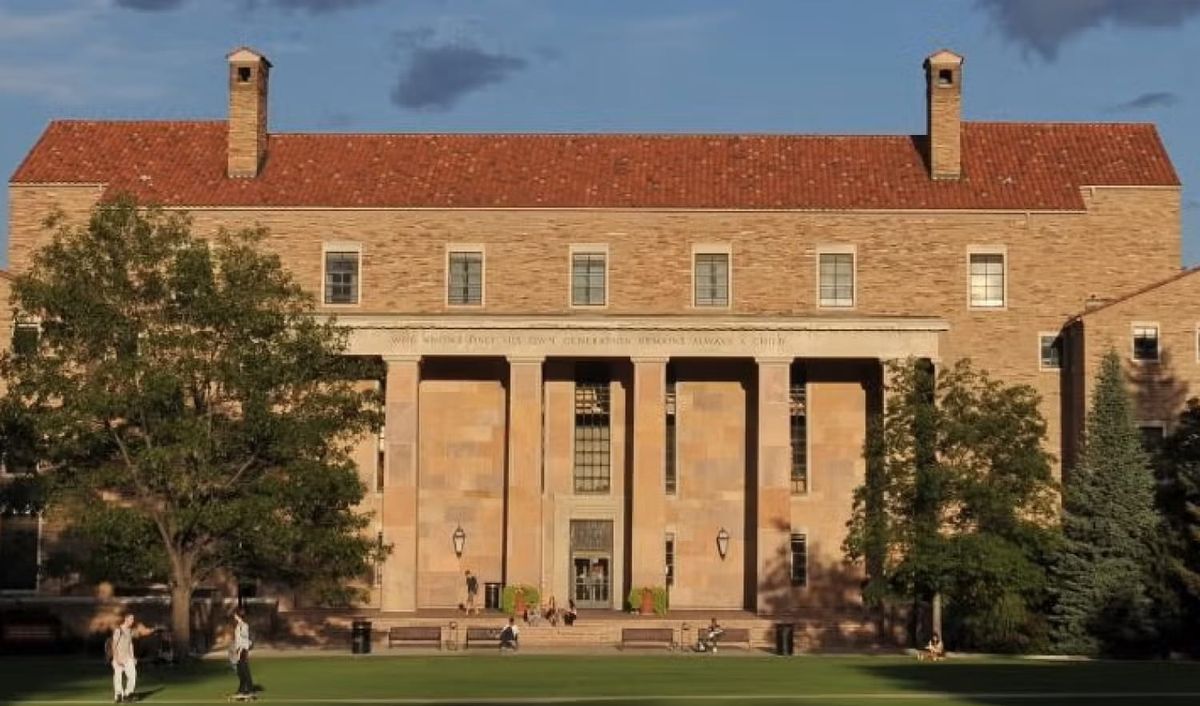
A quarter of a mile from my office stands the Norlin Library. It is the University of Colorado Boulder’s main treasure trove of books, and the heart of its campus. The library is named for George Norlin (1871–1942), a professor of Greek language and literature who served as the university’s president between the two world wars. Among his many accomplishments, Norlin is remembered for demonstrating what courage looks like when academia comes under attack.
Born in a sod house on the Kansas prairie in 1871, Norlin was the son of Swedish immigrants who moved to the United States to become homesteaders. As a child, Norlin fell in love with two things: the great outdoors, and the world of books and knowledge. Norlin was especially drawn the classical world of ancient Greece and Rome. After completing high school in the 1890s, Norlin went off to college, earning a Bachelor of Arts in Greek Language and Literature from Hastings College, Nebraska, followed by a PhD in the same subject from the University of Chicago in 1900. From Chicago, Norlin rode the train west to begin a faculty position at the University of Colorado, a young state institution nestled in the foothills of the Rocky Mountains. CU was to be Norlin’s academic home for the rest of his career.
In 1917, CU’s then-President Livingston Farrand took a leave of absence, and Norlin was named as the school’s acting president. When Farrand formally resigned two years later, Norlin was unanimously elected as his successor.
One of Norlin’s first major acts as president was architectural. To design the next generation of campus buildings, Norlin hired the architect Charles Zeller Klauder, an expert in east-coast college Gothic. Upon seeing the expansive Colorado landscape, however, Klauder made a surprising proposal: a Tuscan Vernacular style that harmonized with Boulder’s backdrop of snowy mountains, grassy plains, and big blue skies. Norlin readily agreed, and to this day CU Boulder’s campus is famous for its sandstone-clad buildings and red-tiled roofs.
Even as the first of the newly designed buildings was taking shape, the school itself was growing fast. CU had first opened its doors in 1877 with 44 students and one teacher. By 1917, CU was home to over 1,200 students, and the enrollment was rising.
But trouble was brewing. A resurgence of the Ku Klux Klan had boiled up in Georgia, and was spreading across the country. By 1921, the group had established a foothold in Colorado. The Klan’s message exploited fear and resentment among Colorado’s white protestant majority, who, in the words of Denver historian Phil Goodstein,
… realized that those with great power and fortunes received an inordinate share of society’s honors while most politicians were bought puppets of the ruling elite. But they never questioned the essential setup. On the contrary, they turned their wrath on those who sought equality with them.
In January 1925, a klansman and former judge named Clarence Morley took the oath of office as Governor of Colorado. That same year, Klan-affiliated members of the Republican party gained a majority in the state legislature. Their core principles, according to a 1925 Boulder newsletter, included “white supremacy” and “limitation of foreign immigration.” Among the bills introduced in the legislature that year: a repeal of civil rights law, and an extension of prohibition to include sacramental wine (an anti-Catholic measure).
The University of Colorado was not exempt from the Klan’s baleful gaze. In 1925, Governor Morley demanded that Norlin fire all Jews and Catholics at the school. If Norlin didn’t comply, the university’s legislative funding would be cut off.
President George Norlin stood his ground.
Instead of complying, Norlin directed the university’s departments to tighten their belts and persevere, subsisting on a slim line of funding that had been written into the state’s constitution.
Klan rule in Colorado proved to be as inept as it was short-lived. Most of the Klan’s bills, including the sacramental wine ban and the civil rights repeal, died in the state senate. In 1926, less than two years after taking office, Morley was tossed out by the voters, and the Klan’s political faction permanently lost control of the legislature.
Meanwhile, under President Norlin’s leadership, the university not only endured but thrived. From 1917 to his retirement in 1939, the school’s enrollment tripled. (Today, there are four campuses; enrollment at the Boulder campus is nearly 40,000.)
On the grand western face of the Norlin Library reads the following inscription, chosen by George Norlin and based on a common saying in classical literature:
Who knows only his own generation remains always a child
References and further reading
CU President George Norlin: Champion of civil rights and an unwavering rebel with a cause. Podcast with Paul Chinowky, hosted by Ken McConnellogue (August 2018).
Davis, J.H. (1965) Colorado Under the Klan. The Colorado Magazine, XLII/2.
Forever Buffs: Norlin's lasting call.
Goodstein, P. (2006) In the Shadow of the Klan: When the KKK Ruled Denver, 1920–1926. New Social Publications.
Schmelzer, E. (2021) Ku Klux Klan ruled Denver a century ago; legacy still felt. AP news.